John Lennon’s Killer Faces His 14th Parole Hearing: Why Freedom Remains Out of Reach
More than four decades after the shocking murder of John Lennon, one of music history’s most devastating tragedies continues to raise difficult questions about justice, remorse, and forgiveness.
On December 8, 1980, Lennon, the legendary co-founder of The Beatles, was shot and killed outside the Dakota apartment building in New York City. He was just 40 years old. His death stunned millions of fans around the world and brought an abrupt end to the life of an artist whose music had helped shape generations.
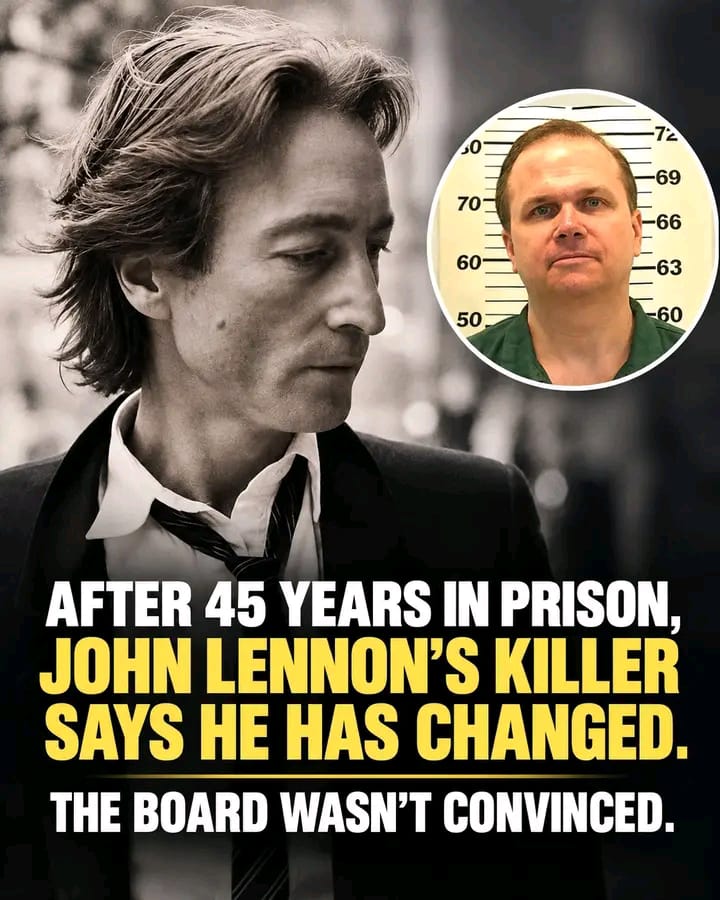
The man responsible, Mark David Chapman, was sentenced to 20 years to life in prison after pleading guilty to second-degree murder. Since becoming eligible for parole, he has repeatedly appeared before the parole board, hoping to secure his release. His 14th parole hearing became another reminder that the consequences of that night have never disappeared.
During his hearings, Chapman has discussed the circumstances surrounding the killing and his reasons for committing the crime. He has described his obsession with Lennon and acknowledged the devastating nature of his actions. Over the years, he has also expressed remorse and spoken about changes in his life while in prison.
But expressing regret is not the same as restoring the life that was taken.
For the parole board, the central question is not simply whether Chapman understands what he did. It is whether releasing him would be consistent with public safety and the interests of justice. The seriousness of the crime, the circumstances of the murder, and the lasting impact on Lennon’s family and loved ones remain significant considerations.
Lennon’s death affected far more than the music industry. To his wife, Yoko Ono, and his sons, Julian and Sean, he was a husband and father whose life was stolen. For millions of admirers, he was a musician, songwriter, and peace advocate whose influence continues through songs such as Imagine, Instant Karma! and Strawberry Fields Forever.
Ono has consistently opposed Chapman’s release, expressing concerns about the safety of her family and the consequences of allowing the killer to leave prison.
Chapman’s repeated parole applications also highlight a difficult reality: the passage of time does not erase the gravity of a violent crime. More than 40 years have passed since Lennon’s death, but his absence remains permanent, while his music continues to reach new generations.
The question facing the parole board is ultimately about accountability, rehabilitation, and whether the public can safely accept a prisoner’s return to society. For Lennon’s loved ones and many fans, however, the idea of his killer walking free remains deeply painful.
John Lennon’s legacy has endured through his music, his message of peace, and the countless lives his work has touched. His murder remains a heartbreaking reminder of how one act of violence can change countless lives forever.
And as Chapman continues to seek freedom, the world is left confronting a question without an easy answer: Can someone ever move beyond a crime that permanently changed the lives of millions?