The Only John Lennon Solo Album to Reach No. 1: The Story Behind Imagine
John Lennon had already changed the history of popular music with The Beatles. But after the band broke apart, he faced a different challenge: proving that his voice could stand just as powerfully on its own.
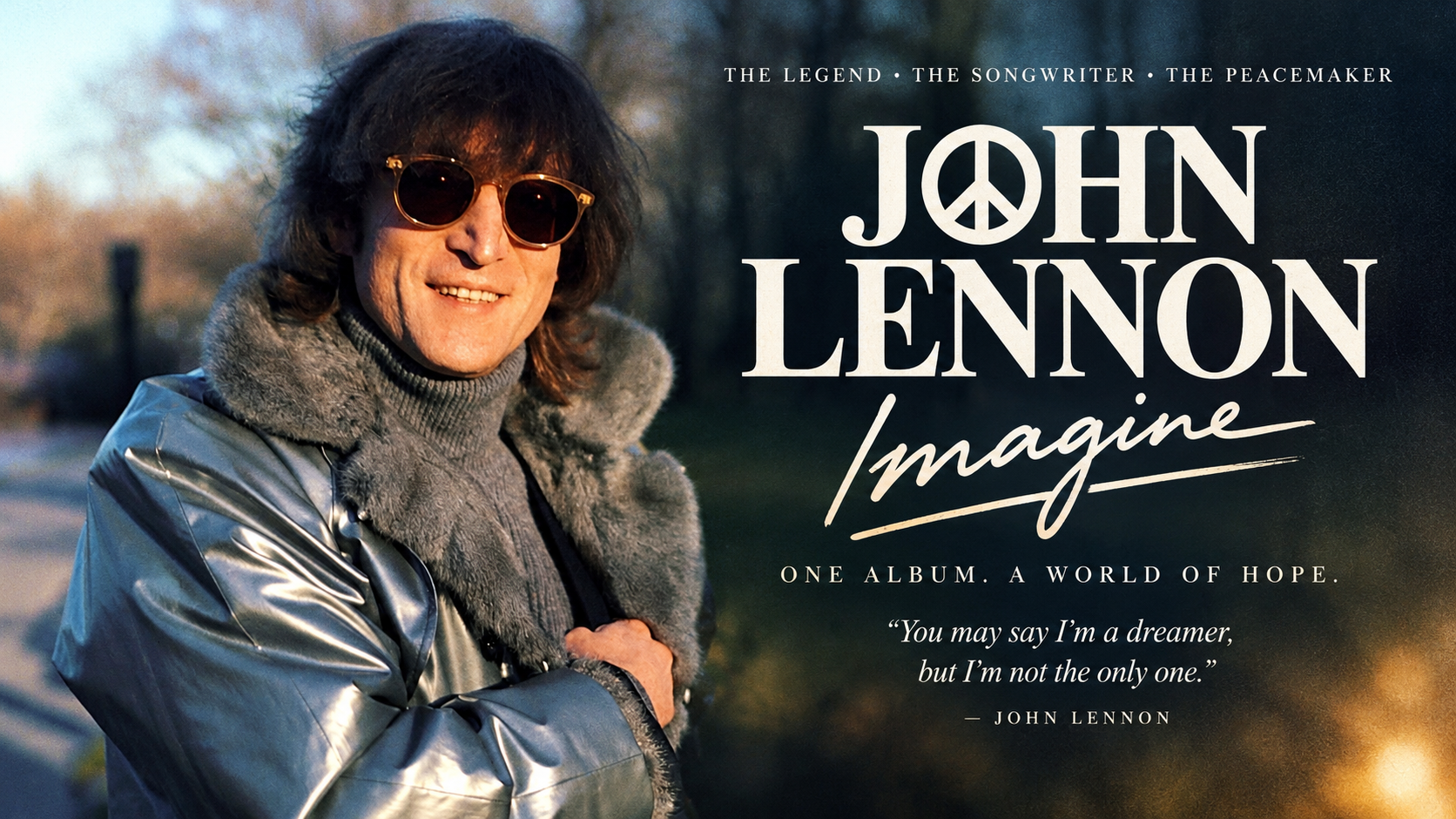
In 1971, Lennon released Imagine, an album that would become one of the defining achievements of his solo career. Featuring the unforgettable title track, the record reached No. 1 on the US Billboard 200 chart and became the only John Lennon solo studio album to top that chart during his lifetime.
A New Chapter After The Beatles
Following the breakup of The Beatles, Lennon began exploring a more personal and direct style of songwriting. His solo work reflected his experiences, political views, relationships, and desire for peace.
Released on September 9, 1971, Imagine presented a different side of the musician. While The Beatles had often experimented with changing musical styles and studio techniques, this album combined melodic rock, piano-driven ballads, and pointed social commentary.
Lennon worked on the record with musicians including guitarist George Harrison, who contributed to several tracks. Phil Spector also helped produce the album alongside Lennon and Yoko Ono.
The result was a collection of songs that balanced intimate personal feelings with larger questions about society and the world.
The Song That Became a Global Anthem
The album’s title track, “Imagine,” became Lennon’s most enduring solo recording.
Built around a simple piano melody and a restrained vocal performance, the song invited listeners to imagine a world without divisions that separate people. Its message was ambitious, and its musical arrangement allowed the words to remain at the center.
Over the decades, “Imagine” has been performed at major public events, memorials, and peace gatherings around the world. It has become closely associated with Lennon’s legacy, extending far beyond the original album.
Yet Imagine was never just about one song.
More Than One Famous Track
The album also included “Jealous Guy,” a vulnerable song about insecurity and regret; “Gimme Some Truth,” a sharp criticism of political dishonesty; and “How Do You Sleep?,” a confrontational track widely understood as part of Lennon’s public feud with his former Beatles bandmate Paul McCartney.
These songs revealed the range of Lennon’s work as a solo artist. He could be tender and reflective in one moment, then angry and outspoken in the next.
“Jealous Guy” later became particularly popular through recordings by other artists, helping the song reach new generations of listeners.
Together, the tracks gave Imagine an identity that was both personal and political.
Why Reaching No. 1 Mattered
The success of Imagine demonstrated that Lennon could achieve major commercial success without The Beatles.
The album topped the US Billboard 200, confirming that his solo career had its own audience and artistic identity. It also performed strongly in other markets, including the United Kingdom, where it reached the top of the album chart.
Although Lennon released several other successful solo records, including John Lennon/Plastic Ono Band (1970), Walls and Bridges (1974), and Double Fantasy (1980), Imagine remains especially significant for its combination of commercial success and lasting cultural influence.
One important distinction matters, however: Imagine was the only Lennon solo studio album to reach No. 1 on the US Billboard 200 during his lifetime. His later album Double Fantasy, recorded with Yoko Ono, also reached No. 1 after Lennon’s death in December 1980.
A Legacy That Never Disappeared
More than five decades after its release, Imagine remains a central part of John Lennon’s musical legacy.
Its songs continue to attract listeners because they reveal different sides of the man behind the legend: the idealist, the provocateur, the husband, the songwriter, and the former Beatle determined to speak in his own voice.
The album’s success was not simply a reminder of Lennon’s fame. It was evidence that his songwriting could stand independently of the band that made him a global star.
John Lennon helped define an era with The Beatles. With Imagine, he created a solo statement that would continue to resonate long after that era ended.
More than 50 years later, the album’s message and music remain alive—and its place in rock history is secure.