Paul McCartney’s Quiet Grief: The Loss of His Father and the Pain He Kept to Himself
In 1976, Paul McCartney was already one of the most famous musicians in the world. He had conquered the music industry with The Beatles and continued building a successful career after the band’s breakup. Millions of people knew his voice, his songs, and his extraordinary talent. But behind the fame was a son facing another heartbreaking loss.
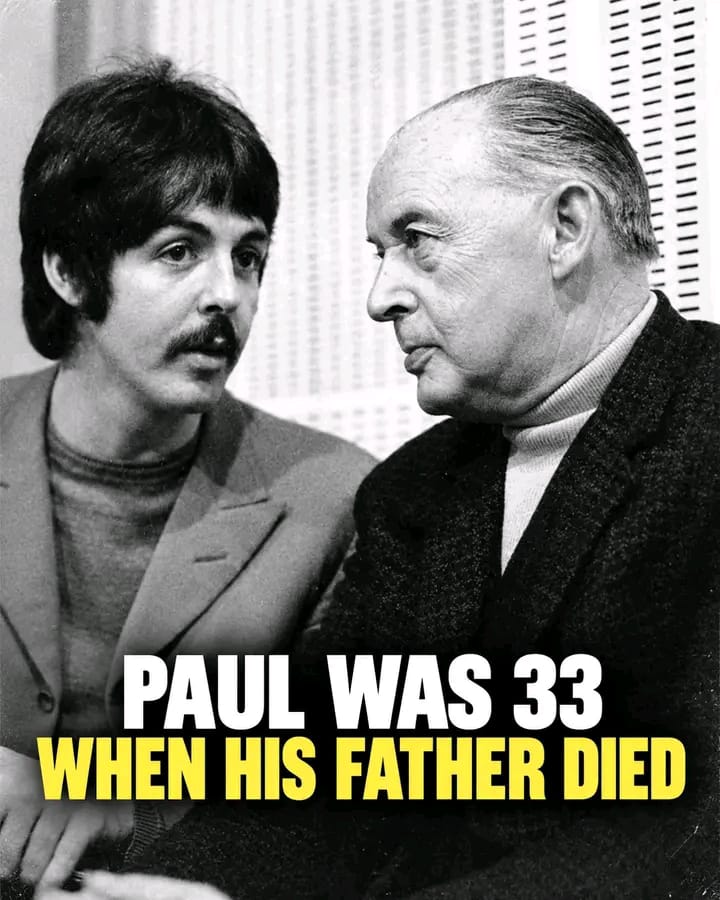
His father, Jim McCartney, died on March 18, 1976, at the age of 73. Paul was 33 years old.
Jim had been part of Paul’s life long before the screaming crowds, sold-out concerts, and worldwide success. He had raised Paul in Liverpool, supported his early musical interests, and watched his son grow from an ordinary boy into one of the most influential musicians of his generation.
Paul had already experienced profound grief when his mother, Mary McCartney, died of breast cancer in 1956. He was only 14 at the time. That early loss became part of his personal history and later influenced the emotional depth of some of his music.
Nearly two decades later, losing his father meant saying goodbye to another important connection to his childhood.
Jim represented a world that existed before Beatlemania—a world of family life, ordinary routines, and memories from Liverpool. As Paul became increasingly famous, that connection to his roots remained an important part of his story.
Yet grief does not always appear in public as tears or dramatic declarations. Sometimes, people continue working, spending time with loved ones, or maintaining their daily routines while privately processing what has happened.
Paul was known for keeping much of his personal life away from public attention. Although the details of his private reaction to his father’s death are not widely documented, the loss marked another significant moment in a life already shaped by the death of his mother.
Music had long been Paul’s way of expressing feelings that ordinary conversation could not always capture. From tender love songs to reflective melodies, his songwriting frequently explored relationships, memories, and the passage of time. However, it would be unfair to attribute a particular song or creative decision directly to his father’s death without clear evidence.
What makes this story meaningful is not an unverified tale of what Paul supposedly did immediately after the funeral. It is the reminder that even someone who had achieved extraordinary success could still experience the deeply personal pain of losing a parent.
The world saw Paul McCartney as a musical legend. Jim knew him first as his son.
And perhaps that is the most touching part of their story: before Paul became a name recognized across the planet, he was simply a boy growing up in Liverpool, with a father who had watched his journey from the very beginning.
Fame can change almost everything about a person’s life, but it cannot make losing a parent any less human.
Paul McCartney’s story reminds us that behind every legend is a person with a family, a past, and losses that the world may never fully understand.