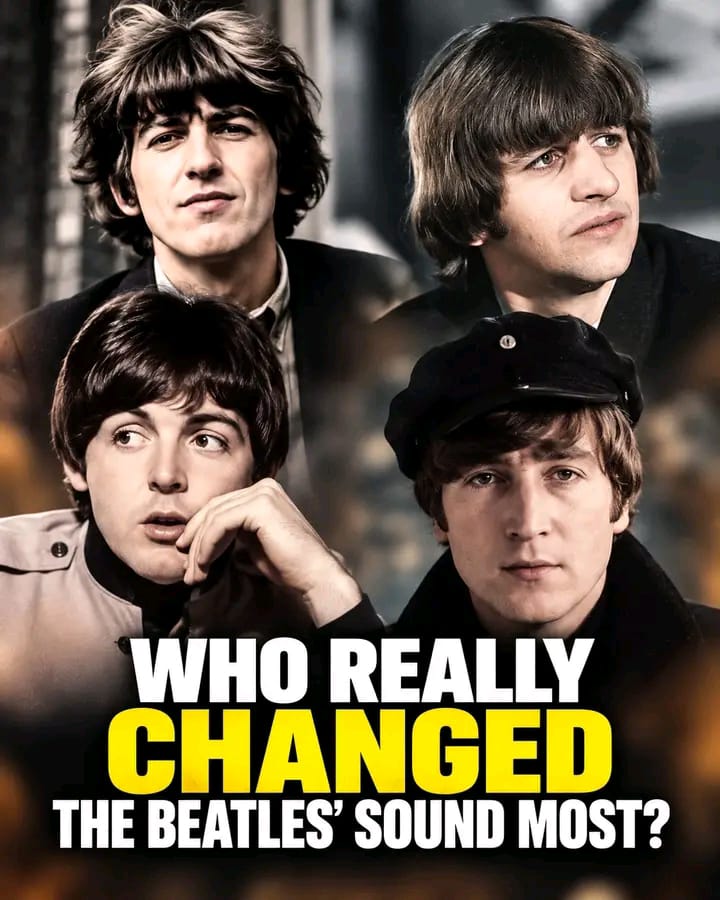
John Lennon or Paul McCartney? Who Really Changed The Beatles’ Sound More?
When people talk about The Beatles and musical experimentation, John Lennon is often the first name that comes to mind. He was fascinated by unusual sounds, unconventional recording techniques, and ideas that pushed popular music into unfamiliar territory. His willingness to challenge traditional songwriting helped make The Beatles one of the most innovative bands in music history.
But here is a hot take that deserves a closer look: John Lennon may have been the more obviously experimental Beatle, but Paul McCartney might have changed the overall sound of The Beatles more than anyone else.
At first, that argument seems difficult to accept. Lennon’s personality, songwriting, and artistic curiosity were closely associated with the band’s more adventurous years. Yet when you examine the music itself, McCartney’s influence becomes increasingly difficult to ignore.
“Tomorrow Never Knows” Changed Everything
Released on the 1966 album Revolver, “Tomorrow Never Knows” remains one of the most groundbreaking recordings in The Beatles’ catalog.
The song was largely driven by Lennon’s vision. Inspired by his interest in psychedelic experiences and the book The Psychedelic Experience, he wanted a recording that sounded unlike anything audiences had heard before. The result featured a droning musical foundation, reversed sounds, unusual tape loops, and a vocal treated to create an otherworldly atmosphere.
However, McCartney played a crucial role in bringing that vision to life.
He experimented with tape loops and manipulated recordings, helping transform Lennon’s unusual idea into a revolutionary piece of studio music. Instead of simply playing their instruments and recording a performance, The Beatles began treating the recording studio as an instrument in its own right.
That distinction matters. Lennon helped imagine the destination, but McCartney was often instrumental in exploring the technical possibilities that could take the band there.
“Tomorrow Never Knows” was not simply a strange song. It was a glimpse of what popular music could become when imagination and recording technology worked together.
“Eleanor Rigby” Proved That Rock Music Didn’t Need a Rock Band
Another powerful example appeared on Revolver.
“Eleanor Rigby” abandoned the familiar Beatles formula of guitars, bass, and drums. Instead, the song centered on a string octet, dramatic vocal harmonies, and lyrics about loneliness, isolation, and forgotten lives.
McCartney wrote the song, with contributions from Lennon and others to the final lyrics. The arrangement, created with producer George Martin, gave it a stark, almost cinematic quality.
There were no conventional rock instruments driving the recording. There was no guitar solo. There was not even a traditional drum performance.
Yet it sounded unmistakably like The Beatles.
That was one of McCartney’s greatest strengths: he could take a pop song and build an entirely different musical world around it. His classical influences, melodic instincts, and interest in orchestral arrangements helped the band move beyond the boundaries of its original sound.
Lennon could be wonderfully unconventional, but McCartney demonstrated that experimentation did not always require distortion, strange noises, or psychedelic effects. Sometimes, the boldest move was to remove the things people expected to hear.
Sgt. Pepper Was More Than an Experimental Album
When Sgt. Pepper’s Lonely Hearts Club Band arrived in 1967, it represented a major turning point in popular music.
The album moved between music-hall influences, psychedelic soundscapes, orchestral passages, Indian instrumentation, studio effects, and elaborate arrangements. It was not simply a collection of songs designed to reproduce the band’s live performances.
McCartney was a major creative force behind the album’s overall concept and several of its most distinctive musical ideas. The title track, “Getting Better,” “When I’m Sixty-Four,” and “She’s Leaving Home” demonstrated his ability to connect different musical styles within a single artistic project.
Lennon, meanwhile, contributed some of the album’s most adventurous and memorable material. “Lucy in the Sky with Diamonds” explored dreamlike imagery and unusual textures, while “A Day in the Life,” co-written by Lennon and McCartney, combined contrasting musical sections into an extraordinary finale.
The album’s achievement came from the interaction between their different instincts.
Lennon frequently pushed toward the surreal, unsettling, and unexpected. McCartney often approached experimentation through structure, arrangement, melody, and production possibilities.
Neither approach was inherently more adventurous. They were different kinds of adventure.
But if the question is who helped reshape the band’s overall musical identity, McCartney’s influence on the album’s direction deserves serious consideration.
The Bass Lines Were Changing, Too
One of the easiest ways to underestimate McCartney is to think of him primarily as the band’s melodic songwriter.
He was also an increasingly inventive bass player.
As The Beatles moved away from straightforward rock and roll, McCartney began using the bass to do much more than hold down the rhythm. His playing became melodic, mobile, and responsive to the other instruments.
Listen to “Rain,” “Something,” “Dear Prudence,” or “Come Together.” The bass lines are not merely supporting the songs from underneath. They help shape their character, movement, and emotional atmosphere.
On “Rain,” released in 1966, the bass contributes to the recording’s hypnotic, heavy feel. On “Something,” it becomes an expressive melodic voice that adds depth to George Harrison’s composition.
This development helped change the way bass could function in popular music.
McCartney also developed an increasingly sophisticated understanding of arrangement. He could make a song feel different by changing how the bass moved, how the backing vocals were placed, or how the instruments interacted.
That influence extended far beyond any single experimental track. It became part of The Beatles’ musical vocabulary.
John Lennon Was Still the Great Challenger
None of this means Lennon should be considered less innovative.
His contributions were essential to the band’s transformation. “Tomorrow Never Knows,” “Strawberry Fields Forever,” “I Am the Walrus,” and “Revolution 9” reveal a musician who was willing to question what a pop song could be.
Lennon brought a rawness and unpredictability that helped prevent The Beatles from becoming too polished or comfortable. His interest in unconventional sounds, abstract ideas, and challenging subject matter pushed the band into territory that more commercially cautious artists might have avoided.
He was also capable of extraordinary musical simplicity. “A Day in the Life” and “Strawberry Fields Forever” show how he could combine memorable melodies with structures and production choices that resisted conventional expectations.
The difference is that Lennon’s experimental identity was often more immediately recognizable. His songs could sound strange, unsettling, or radically different from traditional pop music.
McCartney’s influence was sometimes less obvious because his innovations could sound natural, elegant, or even effortless.
But making something unfamiliar feel inevitable is a form of musical innovation in its own right.
The Beatles Needed Both of Them
Ultimately, separating Lennon and McCartney’s contributions too neatly misses the point.
The Beatles’ greatest achievements emerged from collaboration, competition, and creative tension. George Harrison expanded the band’s musical horizons through Indian music and his own songwriting. Ringo Starr brought distinctive rhythmic instincts. George Martin and the engineering team helped turn ambitious ideas into finished recordings.
Within that environment, Lennon and McCartney often pushed each other in different directions.
Lennon challenged expectations. McCartney explored possibilities. Lennon could introduce an idea that seemed impossible to translate into conventional music, while McCartney might find a way to build an arrangement around it. At other times, McCartney initiated an ambitious project, and Lennon supplied the contrast that made it more interesting.
Their partnership was not a simple division between the experimental Beatle and the melodic Beatle. Both could be experimental, both could write beautiful melodies, and both could challenge the band’s established sound.
The difference was often in how they approached the challenge.
So, Who Changed The Beatles’ Sound More?
If the question is who was more visibly associated with psychedelic experimentation and unconventional ideas, Lennon has an exceptionally strong case.
But if the question is who helped broaden The Beatles’ overall musical identity across songwriting, arrangements, bass playing, orchestration, and studio experimentation, McCartney’s case becomes just as compelling.
His influence reached from intimate ballads to orchestral pop, from inventive bass lines to elaborate studio productions. He helped demonstrate that a rock band could evolve without abandoning melody, and that experimentation could be both accessible and artistically ambitious.
Perhaps John Lennon was the Beatle who most obviously challenged the rules, while Paul McCartney was the Beatle who helped expand what those rules could allow.
And maybe that is why this debate remains so fascinating decades later.
John or Paul? The honest answer may be that The Beatles changed music because neither one was content to let the other have the last word.
But if you had to choose just one musician who changed the band’s overall sound more, who would it be?
John Lennon or Paul McCartney?